
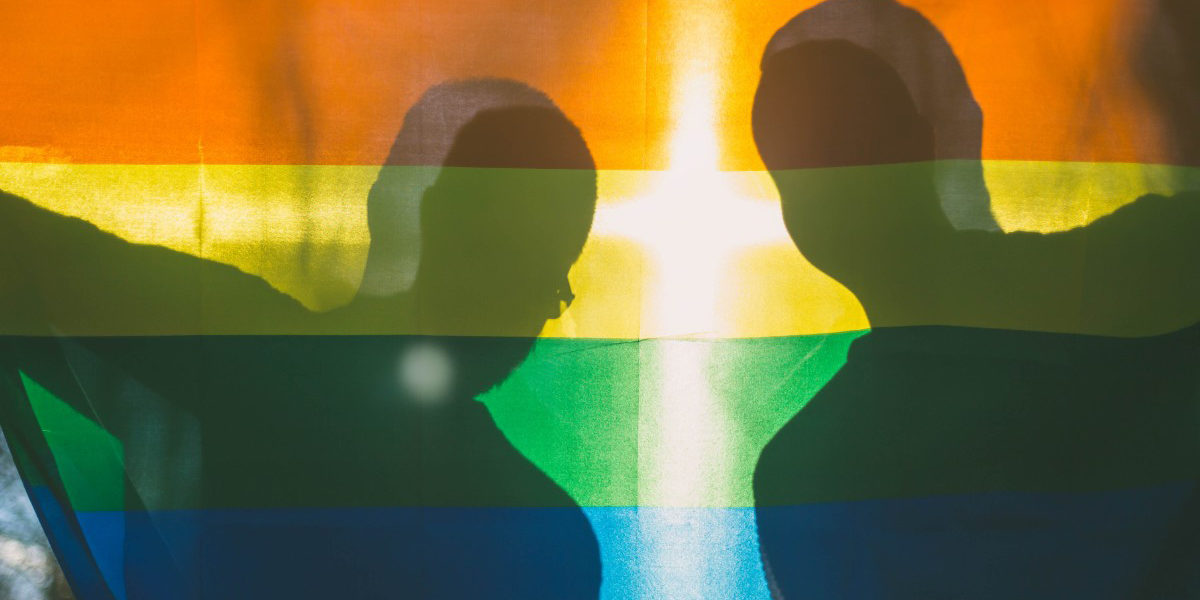
The constitutionality of conversion therapy bans
 The Colleges of Law -
Wed, May 27, 2020
The Colleges of Law -
Wed, May 27, 2020
Upheld after two lawsuits, California’s law banning conversion therapy doesn’t fully protect minors from the practice.
This is the final installment of a three-part series on conversion therapy, its effects, and related legistlation. You can read part 1 and part 2 on our blog.
“The arc of the moral universe is long, but it bends towards justice.”
—Martin Luther King
In 2012, Governor Jerry Brown signed Senate Bill 1172 (SB 1172) into law, making California the first state in the nation to ban the practice of conversion therapy. The bill prohibits mental health providers from engaging in sexual orientation change efforts (SOCEs) with a minor patient. Although the bill is a much-needed step in the right direction, it contains limitations and loopholes that render it the equivalent of using Swiss cheese to plug a hole—limitations that threaten the efficacy of the bill.
A key issue with SB 1172 derives from the definition of SOCEs contained within the bill. SB 1172 defines SOCEs as “any practices by mental health providers that seek to change an individual’s sexual orientation. This includes efforts to change behaviors or gender expressions, or to eliminate or reduce sexual or romantic attractions or feelings toward individuals of the same sex”. The phrase “by mental health providers” leaves the term inaccurate and the bill virtually ineffective as the majority of conversion camps are, in fact, not operated by mental health providers, but are instead facilitated by unlicensed individuals who are quite often affiliated with churches or religious organizations. By failing to address conversion therapy programs administrated by nonprofessionals, the scope of individuals who will be protected under the law is drastically narrowed.
Despite the lack or absence of training or licensure, facilitators of conversion therapy programs proclaim to provide mental health services. According to the National Christian Counselors Association (NCCA), which operates a “Christian Certification/Licensing” program, Christian counselors may be certified to practice without holding an actual degree. Pursuant to the organization’s licensing program catalog, participants who complete the program are required to clearly and properly list the license so as not to misleadingly misrepresent that they are validly licensed by the state to practice. The organization acknowledges that “most states have laws governing the practice of psychology and … regulatory laws help to protect the public …”
Also included is a proclamation that “The National Christian Counselors Association licensure is not a state license, not the equivalent of state licensure, nor a substitute for a state license, rather something distinctly different”. With respect to conversion therapy, the practice itself does not require any type of licensing, is not at all regulated, and is often carried out by individuals who have zero experience in the mental health profession. We wouldn’t allow an unlicensed, unskilled person to perform medical surgery, so why do we allow unqualified individuals to trifle with the fragile mental state of minors under the gross misapplication of the term “therapy”?
The Williams Institute at the UCLA School of Law, after conducting a comprehensive study on conversion therapy, estimates that 57,000 minors across all states will receive conversion therapy from religious or spiritual advisers. By the definition cited in SB 1172, if this ban were nationwide, that number represents minors who would be excluded from protection. UCLA further estimates that 20,000 minors will receive conversion therapy from a licensed health care professional in the 41 states that currently do not ban the practice. Although approximately 18 states have taken action to ban the practice of conversion therapy, some states, such as Oklahoma, have considered enacting legislation to protect the practice.
Legal challenges
Many opponents and critics of efforts to ban conversion therapy claim First Amendment rights to freedom of religion, and more recently, freedom of speech by equating conversion therapy to mere conversation. The First Amendment prohibits federal regulation that infringes on rights granted under the United States Constitution, such as the freedom to exercise religion and the freedom of speech. The Fourteenth Amendment extends these freedoms to the states. A state may permissibly regulate certain types of speech. Individuals are permitted to challenge state law if the law allegedly infringes on constitutional freedoms. This is the contention of opponents of SB 1172.
In 2012, two lawsuits, Pickup v. Brown and Welch v. Brown, were filed in California challenging the constitutionality of SB 1172. Included in the allegations were that SB 1172 violated the right to free speech and the right to free exercise of religion. The District court in Pickup declined to issue an injunction blocking SB 1172. The District court hearing the Welch case, however, concluded that SB 1172 implicates free speech and subsequently issued the preliminary injunction.
On consolidated appeal, the United States Court of Appeals for the Ninth Circuit concluded, among other things, that SOCE practices are classified as conduct, not speech, and therefore, the matter is subject only to rational basis review, which it survives because “SB 1172 is rationally related to the legitimate government interest of protecting the well-being of minors.” The court further concluded that, “in a matter of first impression, parents do not have a fundamental right to chose (sic) for children medical or mental health treatment that the state has deemed harmful”. The court ultimately found in favor of the state and affirmed the decision in Pickup, denying preliminary injunction, and reversed the court in Welch. Plaintiffs’ petitions for rehearing were both denied.
“Many fellow members of the LGBT community are not as fortunate and do not have the support I did and have been subjected to the harmful and fraudulent practice of conversion therapy.”
—Evan Low
Another attempt at protection
In the 2017-2018 Regular Session of the California Legislature, Assembly Member Evan Low introduced Assembly Bill 2943. Section 3 of the bill proposed to categorize advertisement, offering for sale, or sale of services constituting SOCEs to an individual as unfair methods of competition and unfair or deceptive acts or practices, and deem them unlawful. One of the purposes of this bill is to address the loophole in SB 1172 that limited the ban to “mental health professionals.” The new bill, as written, would apply to any person, regardless of licensure, who participates in the advertisement or sale of services purporting to change a person’s sexual orientation.
Although at first appearance, AB 2943 seems to remedy some issues apparent within SB 1172, the new proposed bill is not without its own deficiencies. AB 2943 applies only to the advertisement or sale of sexual orientation change services. By this verbiage, individuals can lawfully participate in the administration of SOCE so long as the services are not advertised and there is no charge. The bill underestimates and fails to account for the power of the proverbial grapevine. It also raises the question of whether SOCE services offered strictly on the basis of donations would remain lawful as donations are considered a charitable gift and would not be considered a charge for services. Despite AB 2943’s progression through the State Legislature, Assembly member Low withdrew the bill just before its final approval.
Constitutional responsibilities
I believe the United States Supreme Court said it best in Gitlow v. New York when it stated, “It is a fundamental principle, long established, that the freedom of speech and of the press which is secured by the Constitution, does not confer an absolute right to speak or publish, without responsibility, whatever one may choose, or an unrestricted and unbridled license that gives immunity for every possible use of language and prevents the punishment of those who abuse this freedom”. It was not the intent of the drafters of the Constitution, or its Amendments, to permit individuals to weaponize protected rights, such as freedom of speech, to endanger the health, safety, and welfare of others, and subsequently attempt to exploit the First and Fourteenth Amendments to shield themselves from the consequences of committing such offensive acts. Though various states have taken steps to protect minors from the harms of conversion therapy, as evinced by the foregoing, much remains to be done.
ABOUT THE AUTHOR:
Wansong Harley is a 3L at the Santa Barbara and Ventura Colleges of Law. She has obtained her BSM in Business Management and an MBA in Accounting at Albany State University. She believes in giving back, paying it forward, and helping the homeless. Wansong believes self-improvement should be a life-long commitment and her favorite saying is “Every man who has gotten where he is – started where he was.” When her head isn’t in the books, she loves to look out her window and watch the waves hit the shore.
Learn more about the Colleges of Law
If you would like to learn about The Santa Barbara & Ventura Colleges of Law, fill out the form below to request more information. Or you can apply today through our application portal.