
How Faculty Support Hybrid J.D. Students in California From Orientation to Bar Prep
 The Colleges of Law -
Tue, Jan 20, 2026
The Colleges of Law -
Tue, Jan 20, 2026
Discover seven ways faculty mentors support Hybrid J.D. students in California, from orientation and academics to wellness, career guidance, and bar prep.
Hybrid J.D. students come to law school with full lives already in motion: jobs, children, caregiving responsibilities, and packed schedules. The concern isn’t always whether the program is flexible; it’s whether support will be there when time is tight and stress is high. At The Colleges of Law, faculty mentorship provides that stability, guiding students from their first weeks through bar prep (and beyond).
Below are seven ways faculty mentorship shows up in practice, with insights from Andrea Funk, J.D., dean of the Hybrid J.D. program, whose decades in legal education inform the program’s student-centered design.
1. Orientation Prepares Students for a Hybrid Law School Model
For Hybrid J.D. students, orientation is about much more than schedules and syllabi.
Faculty use this early phase to help students understand how hybrid legal education actually works: how to manage asynchronous coursework, how to engage meaningfully online, and how to build a sustainable weekly rhythm alongside work and family responsibilities.
“This program wasn’t built by taking a traditional law school and putting it on Zoom,” Funk explains. “It was built from the ground up to be hybrid.”
Because of that intentional design, faculty are deeply involved in onboarding students into the structure and expectations of the program. From day one, students know what engagement looks like, how feedback works, and where to go if they need support.
This early clarity helps students build confidence before academic pressure ramps up—setting the tone for long-term success.
2. Consistent Faculty Engagement Keeps Students on Track
One of the most significant differences in the Hybrid J.D. program is frequency of interaction.
Rather than waiting for midterms or finals, faculty review student work weekly. Assignments are designed to surface understanding, confusion, and progress early, allowing professors to respond in real time.
“We see our students constantly,” says Funk. “We know how they learn, where they struggle, and when something isn’t going well, because they’re engaging every week.”
Students are not anonymous faces in a lecture hall. They are known by name, learning style, and circumstance. This consistency allows faculty to intervene early, provide tailored guidance, and help students course-correct long before grades are at risk.
For many students, this level of visibility feels more personal than traditional law school environments.

3. Structured Academic Mentorship Is Integrated Into Core Courses
Academic support in the Hybrid J.D. program is proactive by design. In addition to faculty feedback, students benefit from a structured mentoring system that includes:
- Dedicated academic advising
- Peer mentors who are trained and vetted
- Targeted course-level support where it’s needed most
Certain classes, such as Real Property, which many students find abstract or theory-heavy, receive additional mentor support. These mentors host office hours, lead review sessions, and walk students through practice hypotheticals tied directly to coursework.
The impact is measurable. Over time, the program has seen:
- Improved retention
- Stronger grades
- Fewer course failures in historically challenging classes
As an example, Funk shares the story of one student who struggled during her first year of law school. Rather than disengaging, she leaned into the layered support built into the program, working closely with faculty and connecting consistently with mentors. This student would go on to become a student mentor herself, then graduate at the top of her class.
By building academic mentorship into the curriculum itself, the Hybrid J.D. program ensures students never have to figure things out alone, and they never have to wait until it’s too late to get help.
4. Faculty Support Recognizes the Real Pressures Law School Students Face
Law school is demanding, and Hybrid J.D. students often face added pressure from careers, parenting, caregiving, and financial responsibilities.
Faculty play a critical role in acknowledging this reality rather than dismissing it. “Our students are whole people,” Funk says. “They’re not just law students. They’re professionals, parents, caregivers. Faculty understand that and respond accordingly.”
Because professors engage with students consistently, they can recognize when stress is mounting. Sometimes that means academic guidance. Other times, it means listening, offering reassurance, or helping a student reset expectations before burnout takes hold.
This human-centered approach helps students stay engaged through the inevitable challenges of law school without feeling isolated or invisible.
5. Wellness Is Supported During Finals and Required In-Person Sessions
Faculty mentorship extends beyond coursework, especially during high-pressure periods like finals.
“Law school is stressful enough,” says Funk. “We’re intentional about creating moments where students can pause, breathe, and feel supported as whole people.”
During in-person residencies, students are supported with intentionally designed wellness experiences, including:
- Quiet research rooms
- Calming environments and soft lighting and music
- Nourishing meals and snacks
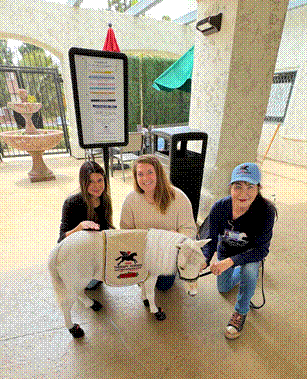
- Therapy horses between exams
- Comfortable spaces to decompress and connect
For Funk, these wellness experiences are as intentional as the exams themselves. “They remind students that they are seen and cared for, especially during the most intense moments.”
6. Early, Personalized Bar Preparation Supports Working Adults
Students take a Bar Studies course during their final semester, allowing them to engage with Bar subjects earlier than many traditional programs. Faculty also integrate bar-style practice into their capstone course, as well as all courses throughout the program, beginning in the first year.
“We think of bar preparation as a six-month process,” Funk explains. “We want to get ahead of that 10-to-12-week period so students can work it into their lives instead of trying to stop everything all at once.”
Beyond coursework, students receive personalized planning through the academic support and Bar prep team. This includes:
- Structured study plans tailored to working adults
- Practice exams and simulations
- Feedback to identify strengths and gaps
- Coaching focused on discipline and realistic scheduling
“The key to Bar prep for working adults is planning and deciding to trust the process,” says Funk.
One way The Colleges of Law supports students through the planning process is by bringing alumni back into the learning community to share their experiences.
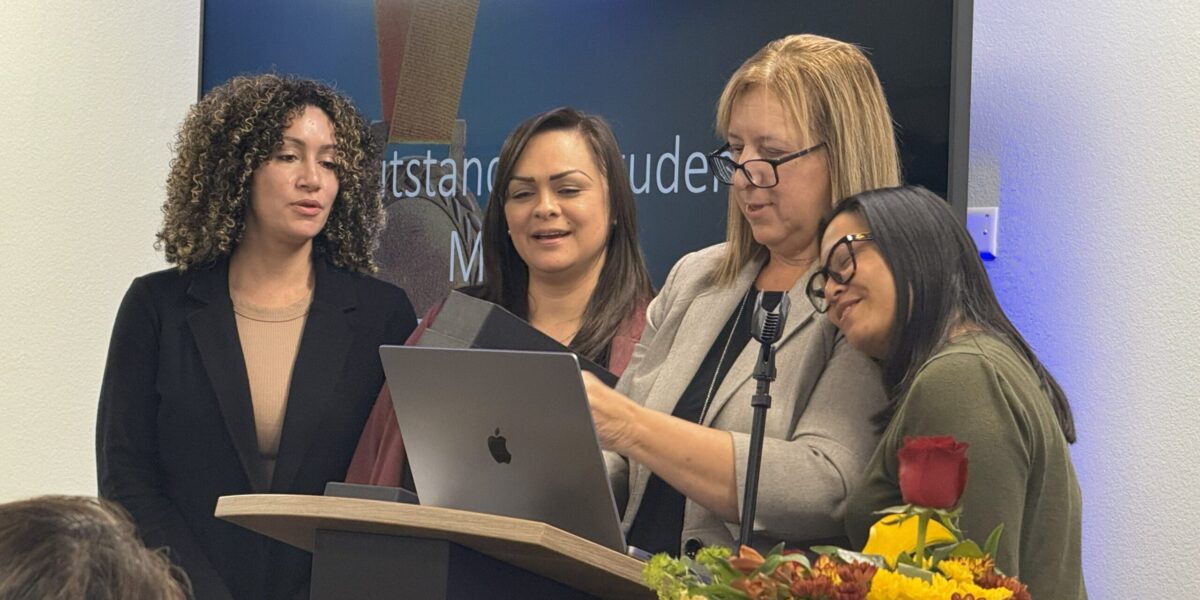
Funk recently hosted a panel featuring six graduates who all passed the bar on their first attempt, each balancing full-time work and family responsibilities. The conversation focused on planning, discipline, and how graduates integrated bar preparation into their lives rather than stepping away from them entirely.
“It was about showing our students that this can be done and how to prepare for it,” says Funk. “Our students can’t pause their lives for 10 to 12 weeks. We help them prepare in a way that fits their reality.”
7. Ongoing Career Mentorship Extends Beyond Graduation
Because faculty work closely with students throughout the Hybrid J.D. program, they develop a deep understanding of each graduate’s goals and lived experiences. That familiarity allows mentorship to extend naturally beyond the classroom.
“We know them, and they’ve had hands-on experience working with us,” says Funk. “Those relationships don’t disappear once the student graduates.”
Faculty mentorship, in this sense, becomes part of a graduate’s professional foundation, something they carry forward well beyond the classroom.
A Hybrid J.D. Program Built on Faculty Mentorship
The Hybrid J.D. program at The Colleges of Law is built on a simple principle: access and excellence are not opposites.
Faculty mentorship is woven into orientation, coursework, wellness, career development, and Bar preparation, creating a learning environment where students are supported at every stage.
Learn more about the Hybrid J.D. program and connect with a legal education community built to support you.